


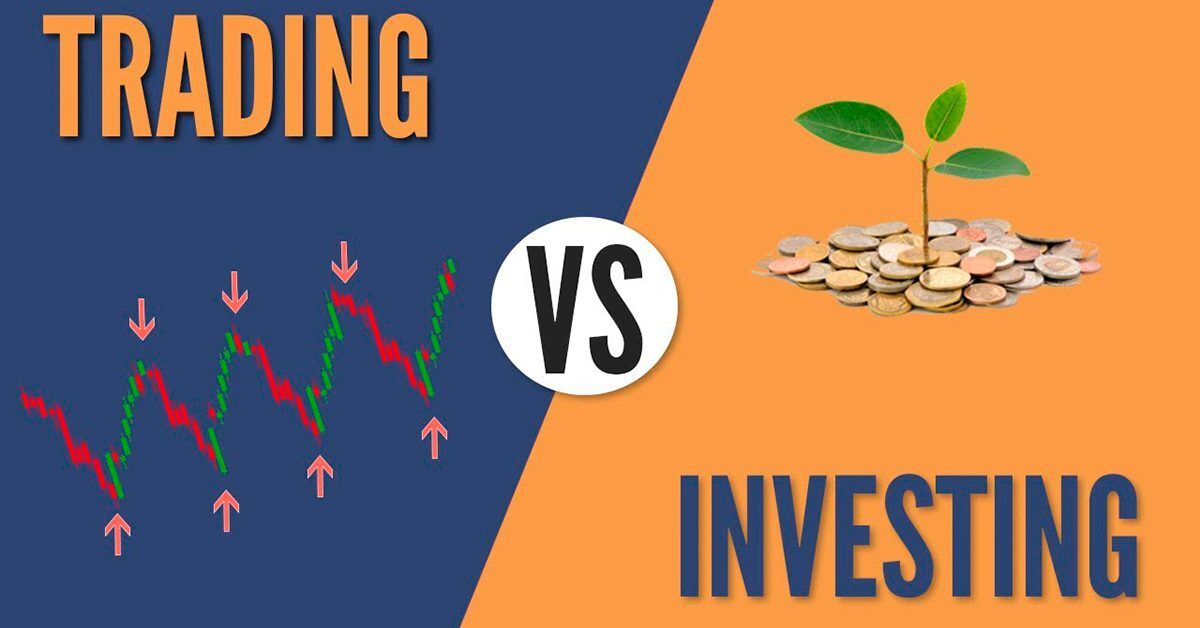
Investing vs Trading – Key Differences
Let’s explore the key differences between two popular approaches to the markets: investing and trading.
What’s the Difference?
1. Time Horizon:
Investing: Investors have a long-term outlook, typically holding assets for years, if not decades. The focus is on gradual growth, dividends, and capital appreciation over time.
Trading: Traders have a short to medium-term perspective, seeking to capitalize on price fluctuations within hours, days, or weeks. The goal is to profit from short-term market movements.
2. Goal:
Investing: The primary objective is wealth accumulation over time. Investors aim to build a portfolio of diverse assets that can generate returns over the long haul.
Trading: Traders aim to make profits in the short term, often using various strategies and tools like technical analysis, chart patterns, and market indicators.
3. Risk Tolerance:
Investing: Investors generally have a higher risk tolerance as they understand that markets can be volatile in the short term but tend to grow over the long run.
Trading: Traders often have a lower risk tolerance, as they actively manage positions and may be more exposed to short-term price movements.
4. Involvement:
Investing: Investors tend to take a hands-off approach, periodically reviewing their portfolio and making adjustments as needed.
Trading: Traders are actively engaged in the markets, executing trades, monitoring positions, and staying updated on market news and events.
5. Assets:
Investing: Investors typically focus on a wide range of assets, such as stocks, bonds, real estate, and mutual funds, to create a diversified portfolio.
Trading: Traders often specialize in specific financial instruments, such as currencies, stocks, commodities, or cryptocurrencies.
6. Market Analysis:
Investing: Investors often rely on fundamental analysis to assess the intrinsic value of assets and make decisions based on a company’s financial health and economic trends.
Trading: Traders often use technical analysis to analyze price charts and patterns, looking for short-term trading opportunities based on historical price movements.
7. Time Commitment:
Investing: Requires less active time commitment since it’s more of a “buy and hold” approach.
Trading: Requires more active time commitment due to the frequent monitoring of positions.